




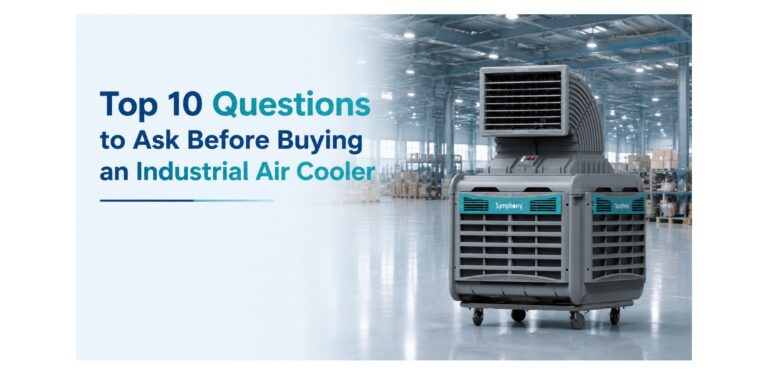
Top 10 Questions to Ask Before Buying an Industrial Air Cooler: A Complete Buyer’s Checklist for Factories, Warehouses, and Commercial Spaces
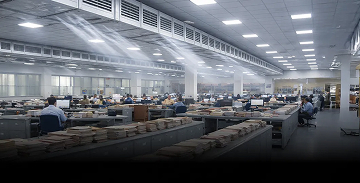
Choosing the wrong industrial air cooler is a costly mistake that is made more often than it should be. Undersized units that cannot cool the space, oversized units that raise humidity uncomfortably, inappropriate technology choices for open environments, cheap units that fail mid-summer, and poorly planned duct installations are the most common outcomes of purchases made without the right information. This article gives buyers a definitive 10-question checklist to evaluate before committing to any industrial or commercial evaporative cooling system. Each question covers a specific dimension of the buying decision: space sizing, humidity, building type, airflow capacity, system configuration, total cost, pad technology, service coverage, installation requirements, and certifications. Working through these questions produces a specification that prevents the most common and expensive mistakes.
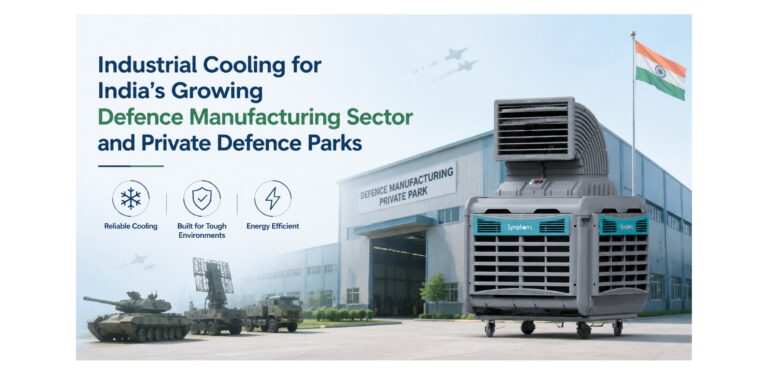
Industrial Cooling for India’s Growing Defence Manufacturing Sector and Private Defence Parks
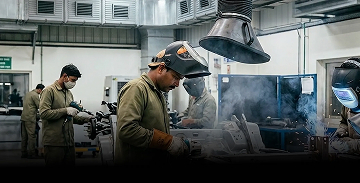
India’s defence production ambition of Rs 3 lakh crore by FY2029 is driving rapid expansion of manufacturing capacity across two dedicated Defence Industrial Corridors in Uttar Pradesh and Tamil Nadu, as well as existing HAL and OFB facilities. Aircraft hangars, ammunition plants, composite fabrication units, precision machining shops, and large assembly bays all present demanding industrial cooling challenges that require heavy-duty, reliable, and in some cases intrinsically safe solutions. This article covers why the defence sector is a growing market for industrial air coolers, what the specific cooling challenges are at each facility type, how to approach hangar and ammunition plant cooling correctly, and where Symphony Venti-Cool’s LSV range fits in this environment.
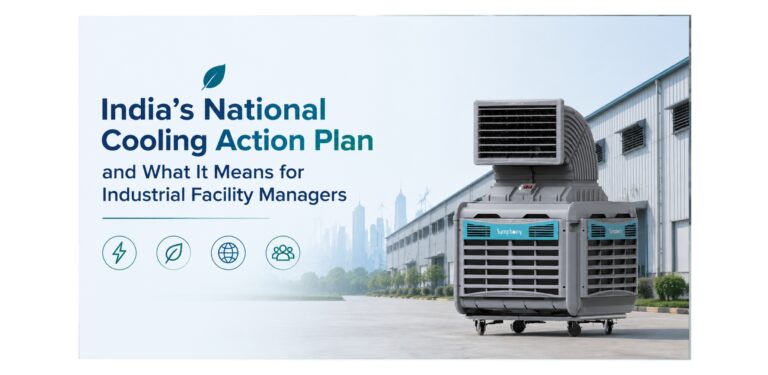
India’s National Cooling Action Plan and What It Means for Industrial Facility Managers
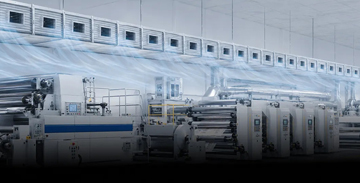
India’s National Cooling Action Plan (NCAP), launched by the Ministry of Environment, Forest and Climate Change, sets a 20-year roadmap to reduce the country’s cooling energy demand by 20 to 25 percent and phase out high-GWP refrigerants. For industrial facility managers, NCAP has direct implications: it shapes equipment procurement decisions, energy audit requirements, ESG reporting expectations, and the selection of cooling technologies for factory floors, warehouses, and commercial spaces. This article explains what NCAP requires, why evaporative cooling is the most naturally aligned industrial technology, how to conduct an energy audit of your cooling system, and what the Scope 2 emission savings from LSV adoption look like in practice.
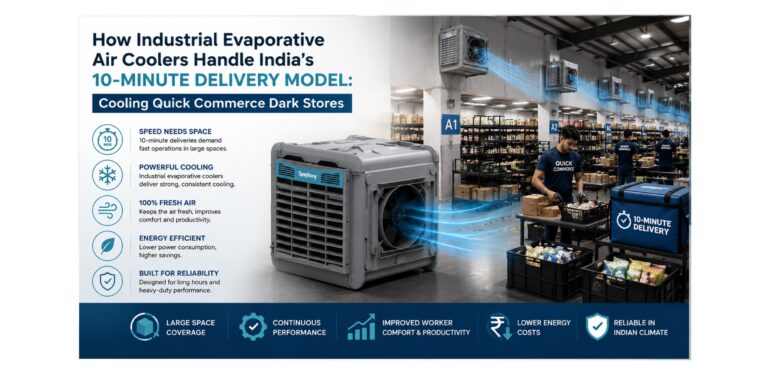
How Industrial Evaporative Air Coolers Handle India’s 10-Minute Delivery Model: Cooling Quick Commerce Dark Stores
India’s quick commerce sector has built over 5,000 dark stores across urban India to fulfil grocery and household orders within 10 minutes. These compact urban warehouses face an acute summer cooling challenge: open loading bays, constant foot traffic, and limited infrastructure budgets make conventional air conditioning impractical. This article explains how industrial evaporative air coolers, particularly Symphony Venti-Cool’s portable and ducted LSV range, deliver effective ambient zone cooling for dark stores, why they outperform AC in this environment, how to size the system correctly, and what the energy cost comparison looks like for operators running multiple dark store locations.
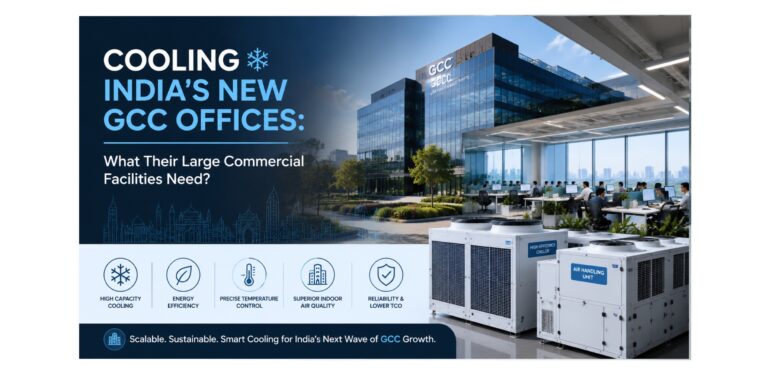
Cooling India’s New GCC Offices: What Their Large Commercial Facilities Need?
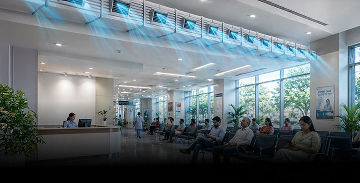
India’s Global Capability Centre (GCC) sector has grown to over 1,700 campuses in 2026, with large-format facilities in Pune, Hyderabad, Bangalore, Chennai, and NCR housing thousands of employees round the clock. These campuses come with a cooling challenge that conventional air conditioning handles poorly: massive semi-open common areas, lobbies, cafeterias, and transit zones that cannot be sealed. Symphony Venti-Cool’s Large Space Venti-Cooling (LSV) system solves this precisely, delivering energy-efficient, fresh-air cooling across large open-plan areas at a fraction of central AC costs. This article explains what GCC facilities need, why evaporative LSV cooling is the right solution for their non-sealed zones, how to size the system, and what the cost comparison looks like over five years.